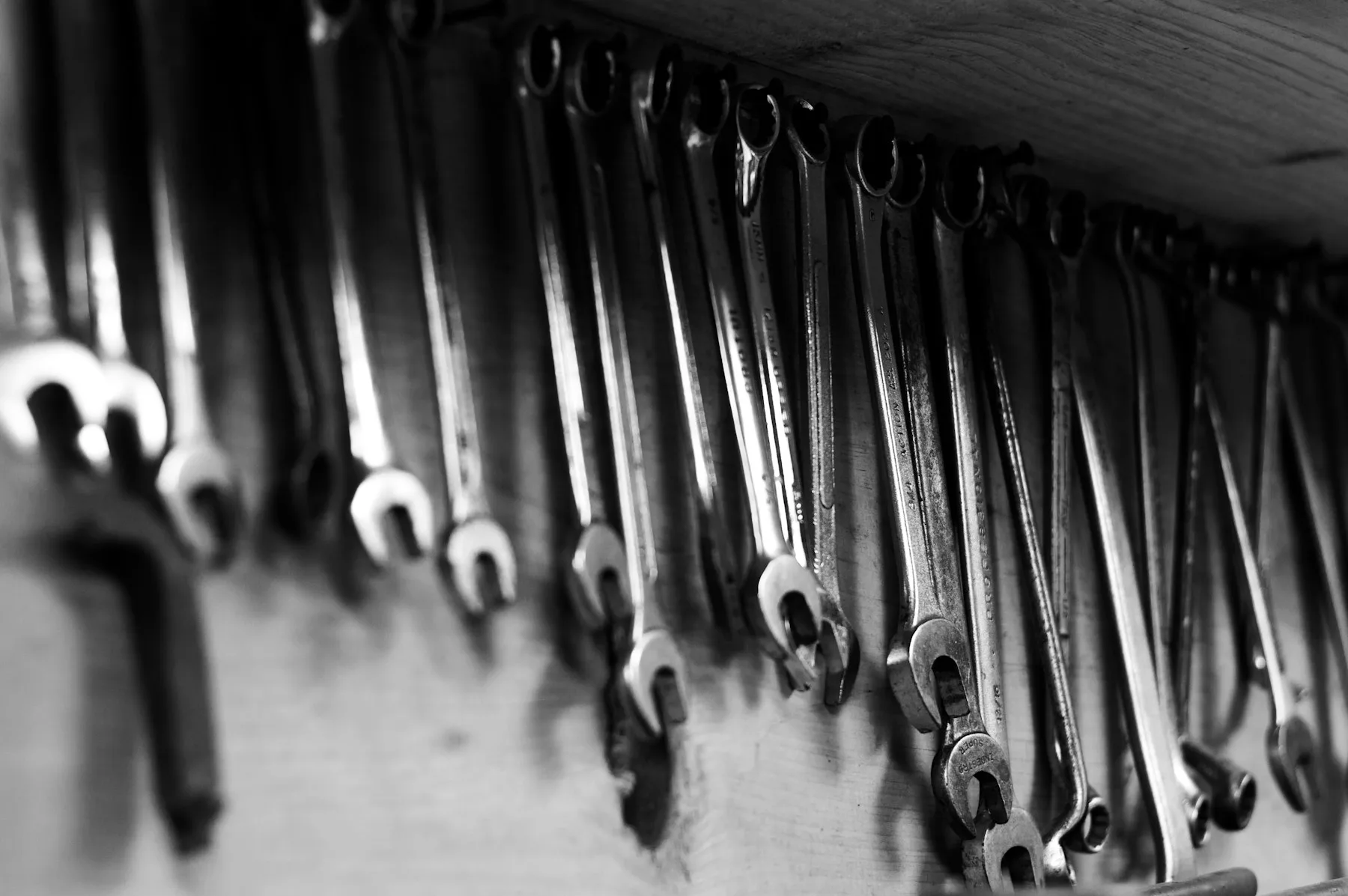
Repairs and parts
Pull up the exact model and saved references when a tool needs a replacement part or service.
Tool inventory app
Keep the model, serial number, receipt, manual, photos, and purchase details with each tool, so the right information is there when one breaks, needs a part, gets sold, or goes missing.
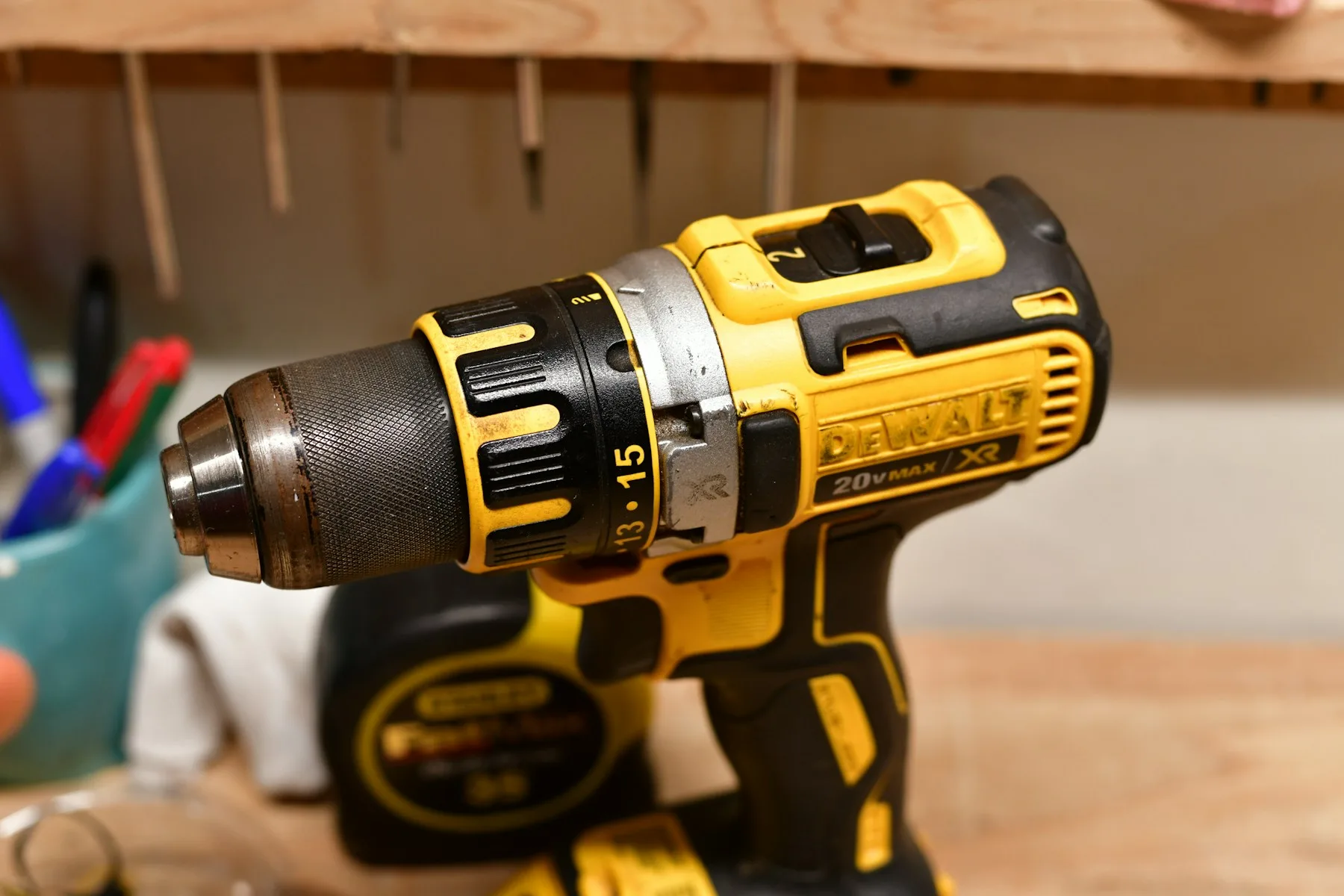
A garage or workshop can fill up with tools bought years apart. A catalog keeps the model, purchase information, condition, photos, supported attachments, notes, and other details from becoming another scavenger hunt.
Pull up the exact model and saved references when a tool needs a replacement part or service.
Find the purchase date, attached receipt or warranty document, or notes you kept with the tool.
Reference the condition, value, photos, and identifying details when replacing or selling it.
Keep a record of what you owned and the identifying information attached to it.
Keep the useful details together
Keep a clear visual record of the tool, its condition, accessories, and identification labels.
Have the exact model ready when you need a part, manual, compatible accessory, or replacement.
Record the identifier before theft, damage, warranty questions, or resale make it important.
Keep the condition of the tool with the record instead of relying on memory later.
Remember when you bought it without digging through years of order history.
Record a value for replacement, resale, or documentation reference.
Attach a PDF or image of proof of purchase instead of leaving it buried in email or a drawer.
Attach a PDF or save a manual link where you will actually look for it.
Keep private PDFs or JPEG, PNG, and WebP images with the tool they describe.
Save blade sizes, accessory details, part numbers, setup notes, or anything else worth remembering.
Keep manufacturer pages, manuals, replacement parts, support pages, and other references close.
Organize the collection around the kinds of tools you own without building a separate database.
From drills to lawn equipment
Catalog the tools you use, maintain, replace, sell, insure, or simply do not want to identify from scratch later.
Drills, impact drivers, saws, sanders, routers, grinders, nailers, compressors, and other powered tools.
Wrenches, ratchets, sockets, screwdrivers, pliers, hammers, chisels, clamps, and tool sets.
Mowers, trimmers, blowers, chainsaws, pressure washers, generators, and other outdoor equipment.
Laser levels, multimeters, torque wrenches, diagnostic tools, test equipment, gauges, and specialty tools.
Battery platforms, chargers, benchtop tools, shop vacuums, work lights, stands, cases, and supporting equipment.
Your workshop, your system
Use categories such as Power Tools, Hand Tools, Lawn & Outdoor, Measuring, Woodworking, or whatever matches the tools you actually own.
Capture what matters
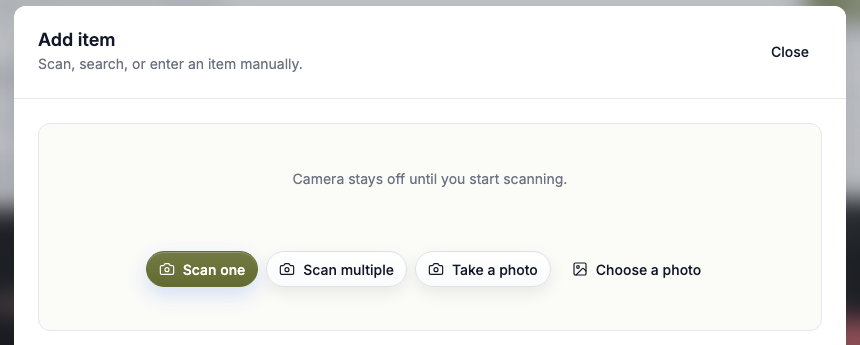
Add a photo and the identifying details you can see. Save the useful record without waiting for a perfect product match or a complete set of fields.
Capture the tool itself and, when useful, a close-up of the model or serial label.
Add the brand, model, serial number, and details that will be hard to reconstruct later.
Attach a PDF or image copy of a receipt, manual, invoice, or warranty document.
Create a useful tool record without waiting for a universal product database match.
Before something goes missing
Tools can add up to a significant part of what you own. Keep a record of the tools, photos, serial numbers, receipts, purchase details, and recorded values you may need after theft, fire, storm damage, or another loss.
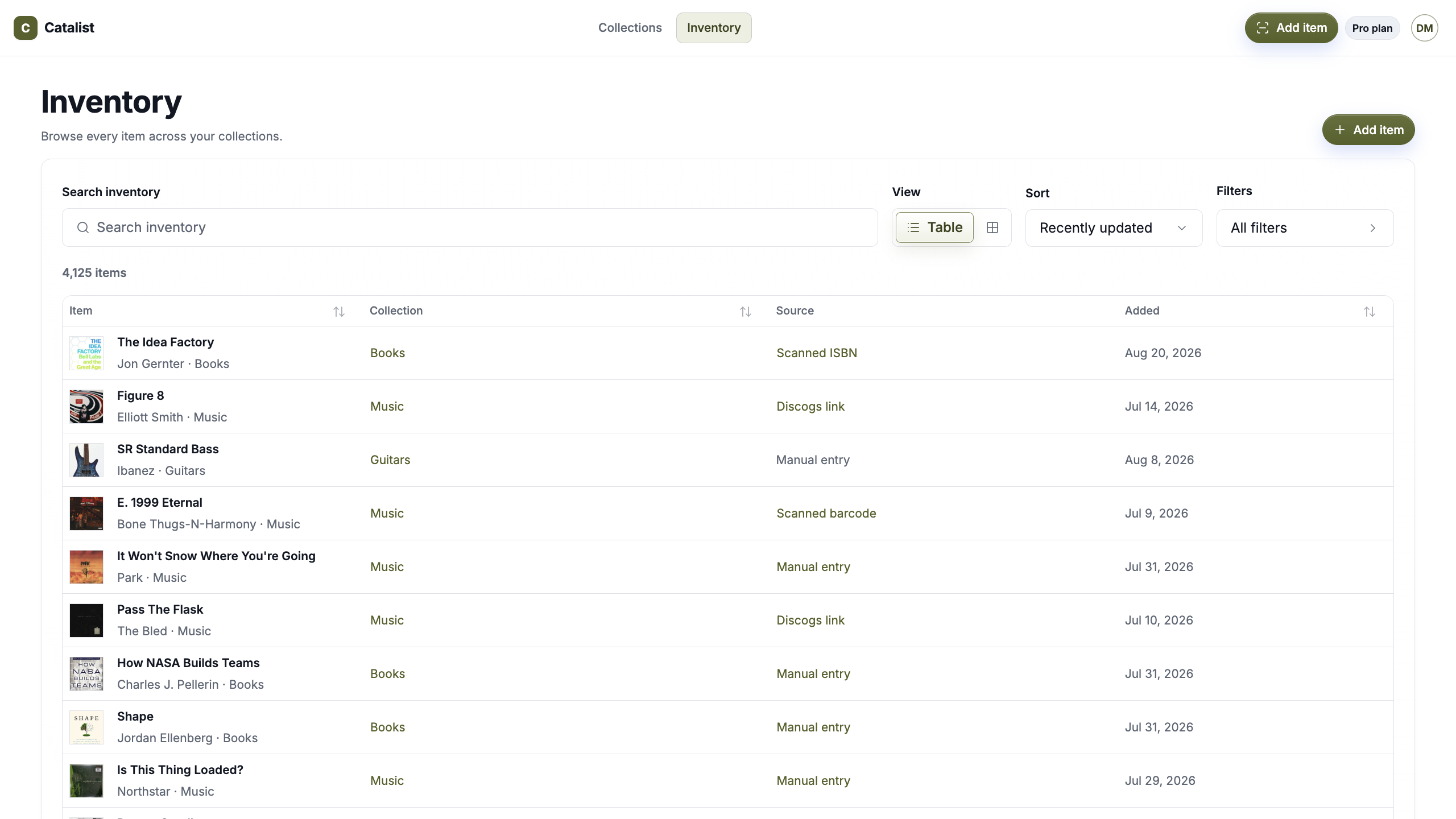
More than tools
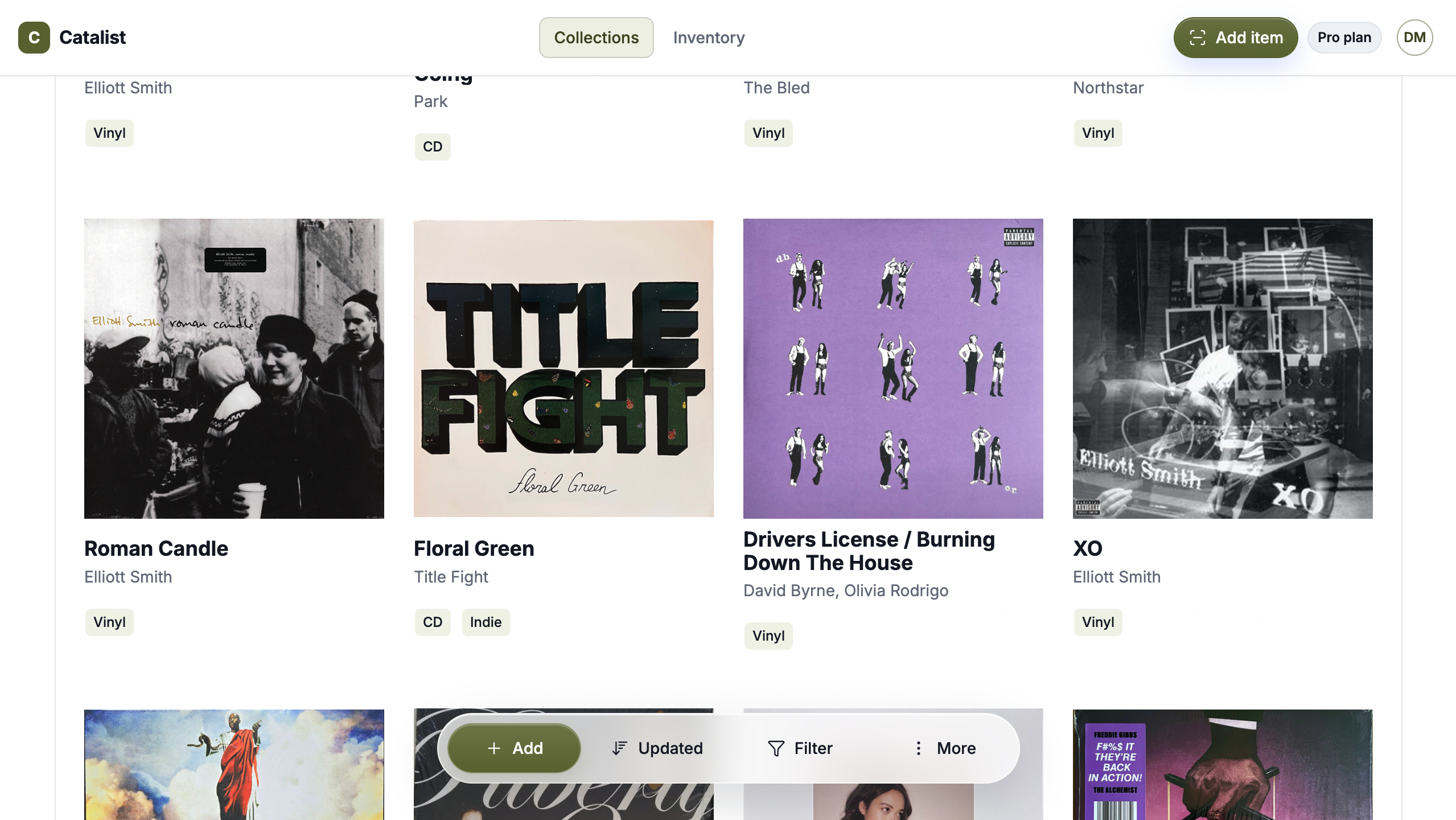
Your tool inventory does not have to live in a business asset app while books, vinyl, technology, home inventory, and other collections live somewhere else.
Keep them together in Catalist, organized in the way that makes sense for each collection.
Explore what you can catalogSimple pricing
Start free or go Pro. Use the same Catalist account for your tools and every other collection you want to keep together.
Catalist Free
Use the complete cataloging experience for up to 75 items across 2 collections.
Catalist Pro Monthly
Catalog unlimited items across unlimited collections.
Catalist Pro Annual
Get the same unlimited Pro plan and save with annual billing.
Questions, answered
What to know about using Catalist as a personal tool inventory app.
A tool inventory app gives you a digital record of the tools you own, including photos, brand and model information, serial numbers, purchase details, condition, values, attached PDF or image copies of receipts and manuals, notes, and other useful records.
Start with tools that would be expensive, difficult, or frustrating to identify or replace later, including power tools, lawn equipment, specialty tools, test equipment, battery systems, and workshop equipment.
Yes. Keep model and serial numbers with the tool alongside photos, purchase information, condition, value, notes, supported attachments, and links.
Yes. Attach them as a PDF or JPEG, PNG, or WebP image, up to 10 MB each.
Yes. Add labeled links to manufacturer pages, manuals, replacement parts, support pages, or other useful references.
No. Product recognition varies by item and supported data source, and Catalist does not currently promise universal tool recognition. You can add any tool manually.
Catalist does not currently provide dedicated lending or borrower tracking.
Catalist can keep purchase details, attached PDF or image copies of receipts and manuals, and notes with a tool, but it does not provide maintenance schedules or warranty-expiration reminders.
A tool inventory can give you a record of the tools you owned. What documentation is accepted or required depends on your insurer and policy.
Catalist is built as a personal inventory and collection app, not workforce, jobsite, check-in/check-out, or warehouse software.
No. Catalist is private by default.
Yes. A Tools collection can live beside books, vinyl, home inventory, technology, and other collections in the same account.
Keep the details that are easy to lose with the tools that are hard to replace.
Private by default · One catalog · Everything you own